Showing Posts From
Edc outfits
-
 RaveShax Editors
 - 24 Apr, 2026
Breakaway Arizona 2026: Lineup, Set Times, What to Wear & Everything You Need to Know
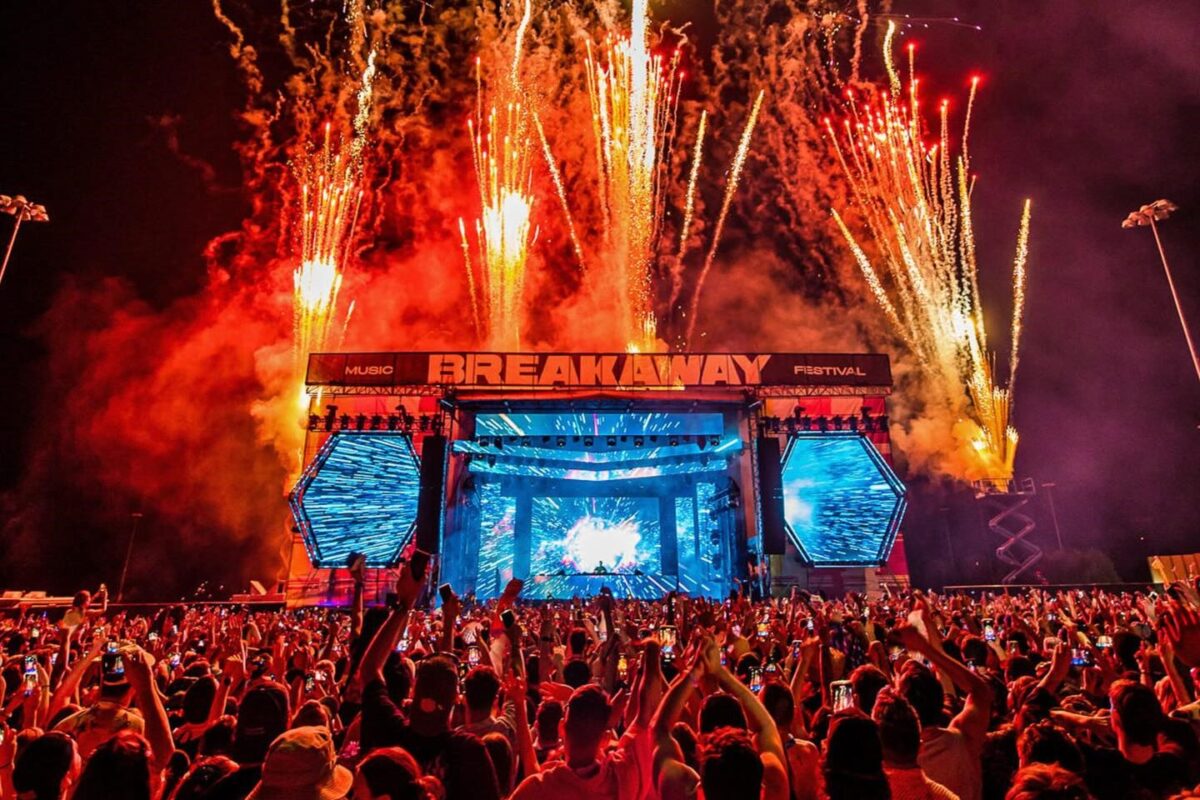
Breakaway Arizona 2026 is happening right now — April 24–25 at Sloan Park Festival Grounds in Mesa. The nation's largest touring music festival is back in the Valley for its second year, and the lineup is the biggest yet: Marshmello, Kygo, Loud Luxury, ISOxo, and James Hype headlining across two stages over two nights. Whether you're already on your way to Sloan Park or watching the lineup from home and planning your next Breakaway city, here's everything you need to know.The Lineup: Who's Playing Breakaway Arizona 2026 Breakaway Arizona runs two stages — the Main Stage and The L.A.B (Leave it All Behind) — across both days. Friday, April 24 Main StageMarshmello — 8:45–10:00 PM (headliner) ISOxo — 7:30–8:30 PM Loud Luxury — 6:20–7:20 PM MPH — 5:25–6:15 PM Xandra — 4:30–5:20 PM Arthi — 3:40–4:25 PM LIVVIEP — 3:00–3:40 PMThe L.A.B StageGrabbitz — 7:40–8:40 PM Mersiv — 6:35–7:35 PM Truth — 5:40–6:30 PM Jon Casey — 4:45–5:35 PM Shima — 3:55–4:40 PMSaturday, April 25 Main StageKygo — headliner James Hype Dr. Fresch Habstrakt Cassian Angrybaby AlignThe L.A.B StageDisco Dom (Dombresky) Effin Steller Delato LeeshThe Venue: Sloan Park Festival Grounds, Mesa AZ Sloan Park is the spring training home of the Chicago Cubs — a 15,000-seat stadium with surrounding festival grounds that Breakaway has transformed into a two-stage outdoor festival space. The address is 2330 W Rio Salado Pkwy, Mesa, AZ 85201. Getting there: Mesa Gateway Airport (AZA) and Phoenix Sky Harbor (PHX) are both within 20–40 minutes by rideshare. There is no official shuttle service, so plan your rideshare in advance — Uber and Lyft surge pricing is common during festival hours. Tickets: Starting at $159 for GA 2-day passes. Single-day and VIP options available at breakawayfestival.com.The Afterparties The official Breakaway AZ afterparties are in Old Town Scottsdale, running 9 PM–2 AM on both nights. Friday, April 24MPH at MAYA Dayclub (21+)Saturday, April 25Dr. Fresch at Cake Nightclub (21+) Disco Dom at MAYA (21+)Afterparty tickets are available separately through the Breakaway website. Old Town Scottsdale is approximately 15 minutes from Sloan Park by rideshare.What to Wear to Breakaway Arizona 2026 Breakaway Arizona in late April means warm days (highs around 85°F) and cooler nights (lows around 65°F). The dress code is festival-forward — this is not a warehouse techno event. Think color, movement, and layering for the temperature drop after sunset. The Daytime Look (3–7 PM) The afternoon sets at Breakaway AZ are in full Arizona sun. Prioritize breathable fabrics and sun protection without sacrificing the aesthetic. For women: A festival bodysuit or two-piece set in a bold print, worn with high-waisted shorts or a skirt. A mesh cover-up or lightweight kimono for sun protection. Comfortable platform sandals or sneakers. For men: A camp shirt or printed short-sleeve in a lightweight fabric, worn with festival shorts or cargo pants. A mesh tank underneath for the hottest hours. Comfortable sneakers or boots. Both: Sunscreen, a hat or bandana, and sunglasses are non-negotiable. Arizona sun is not forgiving. The Nighttime Look (7 PM–Close) As the headliners take the stage, the temperature drops and the lights come on. This is when the festival look shifts into rave mode. For women: Layer a cropped jacket or festival kimono over your daytime look. Add UV-reactive accessories — neon kandi, glitter, or light-up elements — for the strobe-lit main stage experience. For men: Add a statement overshirt or lightweight jacket. A chest harness over a plain tank works well for the L.A.B stage's more underground energy. Swap sandals for boots if you haven't already. The Breakaway AZ Color Palette Breakaway Arizona leans warm — desert tones, sunset oranges, and neon accents all read well in the Arizona landscape. UV-reactive pieces hit differently under the main stage lights at night. The festival's aesthetic is inclusive and expressive: there is no wrong answer, but there is a right energy.Festival Essentials: What to Bring Breakaway AZ is an outdoor festival in the Arizona desert. These are the non-negotiable items:Item Why You Need ItSunscreen (SPF 50+) Arizona April sun is intense; reapply every 2 hoursPortable phone charger 8+ hours of navigation, photos, and Uber callsReusable water bottle Hydration stations are available; stay ahead of the heatLight jacket or layer Temperature drops 20°F after sunsetComfortable shoes You're dancing for 6+ hours; break them in firstSmall crossbody bag or fanny pack Keeps hands free; fits phone, ID, cards, and essentialsKandi PLUR culture is alive at Breakaway; trade on the floorProhibited items include outside food and beverages, professional cameras with detachable lenses, umbrellas, and weapons of any kind. Full prohibited/permitted items list is available on the Breakaway AZ FAQ page.The Artists: Who to Watch Marshmello (Friday Headliner) Marshmello is one of the most recognizable acts in electronic music — the white helmet is as iconic as the drops. His Breakaway AZ set will be a crowd-pleasing mix of his biggest singles and festival-ready edits. If you're at Sloan Park on Friday, the main stage at 8:45 PM is where you need to be. Kygo (Saturday Headliner) Kygo's tropical house sound is perfectly matched to the Arizona desert at night. His live sets incorporate full production — piano, live percussion, and a visual show that rewards being close to the stage. Saturday's headliner slot is one of the most anticipated sets of the weekend. ISOxo (Friday) ISOxo has been one of the most talked-about names in bass music over the past two years. His sound sits at the intersection of hyperpop, dubstep, and experimental electronic — expect a set that sounds unlike anything else on the bill. Loud Luxury (Friday) The Canadian duo's deep house and tech house sound has been a festival staple since "Body" went viral in 2018. Their Breakaway AZ set will be a high-energy crowd pleaser. James Hype (Saturday) The UK DJ and producer is one of the hottest names in commercial house right now. His remix of "Ferrari" has over a billion streams, and his festival sets are known for their energy and crowd interaction. Grabbitz (Friday, L.A.B) Grabbitz is the most genre-fluid act on the Friday bill — his sound incorporates rock, hip-hop, and electronic music in a way that consistently surprises. The L.A.B stage is the right environment for his set. Mersiv (Friday, L.A.B) Mersiv's psychedelic bass music is built for the underground stage. If you want to experience the deeper, more experimental side of Breakaway AZ, the L.A.B stage during Mersiv's set is the place to be.Breakaway Arizona 2026: The Bigger Picture Breakaway is the nation's largest touring music festival, running 12 cities across 2026. The Arizona stop is the third of the year — following Dallas (April 10–11) and Tampa (April 17–18) — and the first to feature Kygo on the bill. The festival's model is deliberately different from destination festivals like EDC or Coachella: rather than requiring attendees to travel to a fixed location, Breakaway brings the festival to your city. The result is a more accessible, community-focused event that draws heavily from local audiences. 2026 Breakaway Tour Dates:Date CityApril 24–25 Arizona (Sloan Park, Mesa)May 15–16 AtlantaMay 29–30 OhioJune 12–14 Las VegasJune 26–27 MinnesotaJuly 17 New York CityAugust 14–15 MichiganAugust 21–22 MassachusettsSeptember 11–12 PhiladelphiaSeptember 25–26 CarolinaOctober 2–3 UtahNovember 13–14 HoustonFAQ: Breakaway Arizona 2026 What are the festival hours? Gates open at 3:00 PM on both days. The final headliner set ends at approximately 10:00–10:30 PM. What is the age restriction? The festival is 18+. The Space Deck VIP experience requires 21+. Can I re-enter the festival? Re-entry policies are confirmed on the day of the event. Check the Breakaway AZ FAQ page for the most current information. Is parking available? Limited parking is available near Sloan Park. Rideshare is strongly recommended — plan your pickup location in advance as rideshare demand surges at the end of the night. What is the VIP experience? The Space Deck is Breakaway's premium VIP experience — an elevated multi-level platform with a direct sightline to the main stage. Table inquiries and pricing are available at breakawayfestival.com. Are there afterparties? Yes — official afterparties at MAYA and Cake Nightclub in Old Town Scottsdale on both nights. Separate tickets required.

- RaveShax Editors
- 18 Apr, 2026
Neon, Chrome & Kandi: What Ravers Are Actually Wearing in 2025–2026
The rave floor has always been a laboratory. But in 2025–2026, it has become a full-scale atelier. From EDC Las Vegas's 30th anniversary spectacle to Ultra Miami's neon-drenched cyberpunk grid, from Electric Forest's moss-and-moonbeam fantasycore to the tech-forward reinvention of Kandi culture, what ravers are wearing right now is not a costume — it's a statement of total self-construction. The dance floor is the runway. The crowd is the collection. Here is what the scene actually looks like in 2025–2026, documented from the front row of every major event that matters. EDC Las Vegas 30th Anniversary: Kinetic Maximalism Takes Over The 30th anniversary of Electric Daisy Carnival — themed "Kinetic Journey" — announced, definitively, that restraint has left the building. The defining visual language was what fashion insiders are now calling Kinetic Maximalism: UV-reactive layering worn as a total system rather than a single piece, neon garden glow light-up bras worn as standalone tops, and the "Inferno Halo" bodysuit silhouette — a structured harness-and-bodysuit hybrid that treats the ribcage as architectural space. What made EDC's 30th anniversary visually distinct from prior years was a deliberate shift in how people thought about light. The interaction between bodies and stage lighting became the actual design brief. Ravers chose holographic mesh overlay layers not just to be seen but to react — to shift from chrome-silver to iridescent violet under different light temperatures. LED-reactive base layers worn under sheer holographic mesh created a depth effect that no single piece could achieve alone."The interaction between bodies and stage lighting became the design brief."The silhouette itself leaned structured and sculptural: cut-out bodysuits cinched with ring hardware, asymmetric crop tops with layered tulle skirts, and platform boots — the enduring anchor of the rave look — now competing with app-controlled LED sneakers like the YRU "Qozmo" platform and fiber-optic boots that sync visual patterns with a smartphone. EDC 2026 officially made wearable tech not a novelty but an expectation. Ultra Miami: Neo-Cyberpunk Takes the Beach If EDC went radiant, Ultra Miami went dark — and the contrast could not be more intentional. Ultra 2025 delivered a dominant aesthetic that editors and community photographers are now labeling "Neo-Cyberpunk" and "Urban-Beach Fusion": black and neon color-blocking, heavy hardware in the form of buckles and speed clasps, reflective chrome mini-skirts that photograph like liquid mercury, and the piece that defined the weekend — the hooded chain harness bodysuit. The Ultra aesthetic is not just about darkness. It's about precision. Where EDC invites layered exuberance, Ultra rewards the edit: a single statement piece — a holographic two-piece, a cage bodysuit, a chrome-paneled bralette — worn against a stripped-back backdrop of black. The tension between technical streetwear sensibility and beach-festival context produces the exact visual friction that makes Ultra outfits so immediately recognizable on social media. Body paint at Ultra continued its evolution toward "Chrome Skin" — using professional pigments like Mehron silver to create full-torso metallic effects — and "Rhinestone Maps," where facial gem patterns follow bone structure rather than masking it, framing the face as topography rather than covering it. The overall message: Ultra wants you visible from a distance and legible up close. Electric Forest: Fantasycore in the Trees Electric Forest has always occupied a different frequency from the hard-techno energy of EDC or Ultra, and in 2025 that distinction crystallized into a fully realized aesthetic genre: Fantasycore. The visual vocabulary is built from "Flora Fantasy" crochet bras, mushroom-print cloaks, fiber-optic wings worn as backpieces rather than costumes, and corset-forward silhouettes that read as forest-nymph-meets-Renaissance-faire. The community hashtag #ForestFam generated tens of thousands of tagged looks across the weekend, and what emerged as the defining through-line was not a single piece but a commitment to tactile, handmade, nature-referencing materials — crochet, lace, woven fiber, and iridescent organza used not as festival costume but as genuine personal expression. Electric Forest has always been where rave fashion and cottage-core overlap; in 2025, that overlap produced something entirely its own. Influencers helping define and amplify this visual language include Emma Kapotes, The Carly Morgan, and Rowi Singh, all of whom have overlapping festival and fashion audiences that blur the line between rave-wear and editorial styling. Electric Forest is where those two worlds feel most genuinely reconciled. Kandi Culture 2025–2026: From Singles to Smart Beads No element of rave culture carries more communal weight than Kandi — and no element has evolved more dramatically in the current cycle. The wrist "single" — a single-strand bracelet traded in the PLUR handshake — remains the cultural foundation, but the form has expanded into territory that would have been unimaginable at a 1990s rave. 3D Kandi Cubes are the dominant structural innovation: geometric, multi-dimensional bead constructions worn on wrists, necks, and across chest harnesses that function as wearable sculpture. Alongside them, LED-integrated Perler beads — backlit pixel-art sprites featuring everything from game characters to original designs — have created a category of Kandi that functions as both accessory and light source after dark. The most technically ambitious development is NFC Kandi: beads with embedded near-field communication chips that, when tapped with a smartphone, link directly to a social media profile, a Spotify playlist, or a custom message. NFC Kandi turns the physical PLUR trade — the most intimate act of rave community-building — into a digital handshake. The bead you receive is now a portal. Running parallel to the tech evolution is "Unhinged Kandi": a deliberate, humor-forward counter-movement where traditional PLUR phrases are replaced with absurdist or irreverent text — inside jokes, chaotic affirmations, nonsense phrases — that spread virally within communities. Unhinged Kandi is the scene's way of holding both sincerity and self-awareness at the same time, and it has become one of the most-shared categories of rave content across social platforms. Together, these evolutions tell the same story: the rave floor in 2025–2026 is more visually ambitious, more technically inventive, and more culturally self-aware than it has ever been. The looks are getting harder to ignore in the daylight. And honestly? They were never meant to be ignored anywhere.
- RaveShax Editors
- 14 Apr, 2026
Flow Arts Fashion: A Community Guide to Performance Wear, LED Accessories, and Dressing for the Art Form
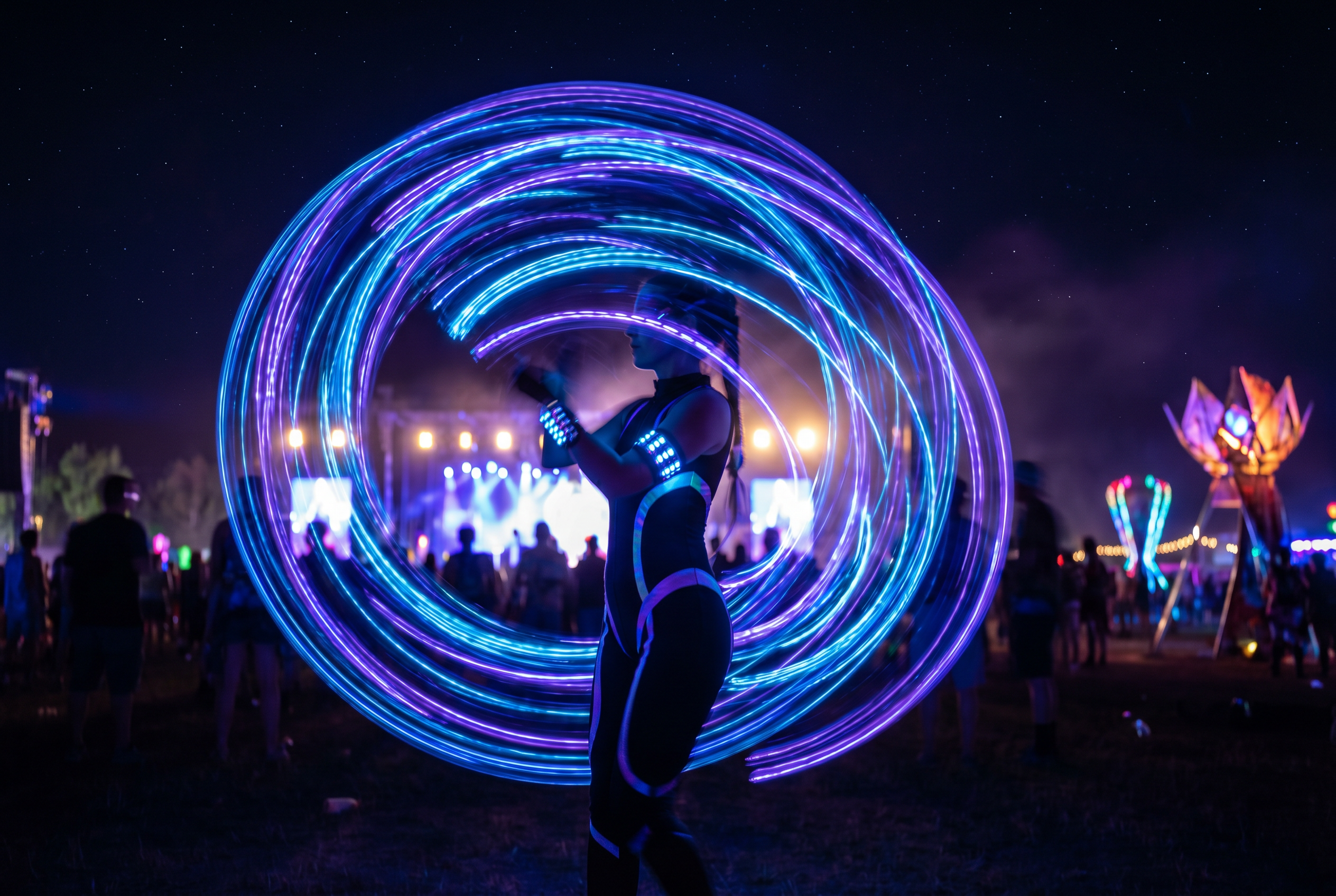
Picture a poi dancer mid-spin at EDC Las Vegas. The LED poi trace arcs of light through the dark — blue, then white, then a wash of violet — and for a moment the crowd stops moving to watch. The dancer's outfit is not incidental. The holographic fabric catches the stage wash and throws it back. The silhouette is clean enough that the poi trails read clearly. The fit allows a full 360-degree arm extension without restriction. None of that happened by accident. Flow arts is a discipline — poi, staff, hoop, fans, juggling, contact ball, rope dart, and the dozens of forms that have evolved from them. The practitioners who carry these disciplines are among the most fashion-conscious, community-embedded members of any festival audience. When your outfit is part of the performance, every fabric choice, every LED component, and every silhouette is a design decision. This guide is for the people who understand that. What Is Flow Arts? (And Why the Fashion Matters) Flow arts is a family of movement disciplines that sit at the intersection of performance, visual culture, and community. The term encompasses any practice that uses props — poi, staff, hoops, fans, juggling props, contact ball, rope dart — in a movement practice oriented toward flow state: the psychological condition of complete absorption in a challenging, rewarding activity. The PLUR lineage is direct. Flow arts emerged from rave culture in the 1990s, when glowsticking evolved into poi and the first generation of LED props appeared on festival floors. The community that grew around these practices is among the most tightly knit in rave culture — practitioners recognize each other across festivals, trade techniques, and form communities that persist year-round. Why does fashion matter in flow arts? Because the outfit is part of the performance. A poi dancer performing at night is creating a visual experience — the trails of light, the silhouette, the way the fabric moves with the body. Every element of the outfit contributes to or detracts from that visual experience. A baggy shirt that catches the poi cord is a safety issue. A fabric that absorbs light instead of reflecting it diminishes the visual impact. A silhouette that obscures the body's movement makes the technique harder to read. Flow arts fashion is not decoration. It is equipment.The Four Disciplines and What Each One Demands from an Outfit Each flow arts discipline has specific physical requirements that translate directly into outfit requirements. Understanding these requirements is the foundation of dressing for the art form. Poi: Full Range of Motion, No Cord Interference Poi — two weighted objects on cords or chains, swung in patterns around the body — requires complete freedom of movement in the shoulders, arms, and torso. The primary outfit concern is cord interference: any loose fabric, dangling accessory, or ill-fitting sleeve can catch a poi cord mid-spin, disrupting the flow and creating a safety risk. What poi demands: Close-fitting upper body. No loose sleeves, no dangling jewelry, no scarves or flowing fabric near the arms. The lower body can be more relaxed — wide-leg pants and flowing skirts work well for poi because the props operate primarily in the upper body plane. Ideal poi outfit: Fitted crop top or sports bra + high-waist wide-leg pants or a flowing skirt. The upper body is clean and close-fitting; the lower body adds visual interest and movement. Staff: Structural Silhouette, Visible Body Lines Staff — a rigid prop spun around the body in contact moves — requires a different approach. The staff passes close to the body, and the practitioner's silhouette needs to be readable for the technique to communicate visually. Baggy clothing obscures the body lines that make staff technique legible. What staff demands: A silhouette that reveals the body's position at all times. Fitted clothing throughout — not necessarily tight, but structured enough that the body's geometry is visible. Fabric that moves cleanly without billowing. Ideal staff outfit: Fitted bodysuit or crop top + fitted leggings or structured trousers. The entire silhouette should be clean and readable. Hoop: Movement-Forward, Waist-Friendly Hula hoop flow — including off-body hooping, isolation work, and full-body hoop dance — centers on the waist and hips. The hoop passes around the body at waist height, which means anything at the waistline — a high waistband, a belt, a tucked-in shirt — can interfere with the hoop's path. What hoop demands: A smooth, unobstructed waistline. No belts, no high-waisted waistbands that extend above the hip, no tucked-in shirts. The fabric at the waist should be smooth enough that the hoop slides cleanly. Ideal hoop outfit: Low-to-mid rise bottoms (shorts, leggings, or a skirt with a smooth waistband) + a top that doesn't tuck in. A crop top is ideal — it keeps the waistline completely clear. Fans: Expressive Upper Body, Fabric as Extension Fan dancing — using large fabric or feather fans in flowing, expressive movement — is the most fashion-forward of the flow arts disciplines. The fans are visual extensions of the outfit, and the outfit should be chosen to complement them. What fan dancing demands: Upper body freedom and visual coherence with the fans. The outfit and the fans should feel like a unified visual system — not a costume wearing accessories, but a single expressive statement. Ideal fan dancing outfit: A flowing, expressive outfit that matches or complements the fan's color palette. Silk or chiffon fabrics that move similarly to the fan material. The outfit should be as much a performance element as the fans themselves.Flow Arts Performance Wear: Fabric Guide The right fabric is the foundation of every flow arts outfit. These are the materials that work — and why. UV-Reactive Fabrics: The Night Performance Standard UV-reactive fabrics absorb ultraviolet light and re-emit it as visible glow — the effect that makes a white outfit appear to glow under blacklight. For flow arts practitioners performing at night under UV lighting (standard at most festival stages), UV-reactive fabric transforms the outfit into a light source. Best UV-reactive options:UV-reactive spandex: Available from Spandex World and Etsy. Stretches with the body, holds its UV reactivity through washing, and comes in a range of colors. The standard for close-fitting performance wear. UV-reactive mesh: Lightweight and breathable. Works as a layering piece over UV-reactive spandex for a depth effect. UV-reactive organza: For fan dancing and flowing silhouettes. The sheer quality of organza creates a luminous effect under UV light.Care note: Wash UV-reactive fabrics in cold water on a gentle cycle. Avoid fabric softener — it coats the fibers and reduces UV reactivity over time. Holographic Fabrics: The Stage Light Performer Holographic fabrics don't glow — they reflect. Under stage lighting, a holographic fabric shifts through the color spectrum as the angle of light changes. The effect is dramatic and highly photogenic. Best holographic options:Holographic spandex: The most practical option for close-fitting performance wear. Stretches, breathes, and photographs dramatically under stage lighting. Holographic organza: For flowing pieces — skirts, capes, and fan dancing outfits. The combination of holographic finish and flowing movement is one of the most visually striking effects in flow arts fashion.Performance note: Holographic fabrics perform best under white or amber stage lighting. Under colored stage wash, the holographic effect is less pronounced. Stretch Fabrics for Movement: What the Numbers Mean Any performance wear fabric should have at least 50% stretch in both directions (four-way stretch). This ensures the fabric moves with the body without restricting range of motion or pulling at seams. Stretch percentage guide:50–60% stretch: Adequate for most flow arts disciplines. Comfortable for extended wear. 70–80% stretch: Ideal for poi and staff, where full arm extension is required. The fabric should feel like a second skin at full extension. 80%+ stretch: Swimwear-grade stretch. Used for the most close-fitting performance pieces.Fabric weight: Lighter fabrics (3–5 oz/yard) are better for warm festival environments. Heavier fabrics (6–8 oz/yard) provide more structure and are better for cooler evening performances.LED Flow Arts Accessories: Integrating Light Into the Outfit LED accessories are the intersection of performance equipment and fashion. For flow arts practitioners, they serve a dual purpose: they're part of the performance (LED poi, LED staff, LED hoops) and part of the outfit (LED body accessories, light-up garments). LED Props: The Performance Equipment That Defines the Look LED poi: The standard for night performance. Modern LED poi (Flowtoys, Hyperion, Glowtoys) offer programmable light patterns, color cycling, and app control. The poi's light output should be considered as part of the outfit's overall light design — a poi set with warm amber tones pairs differently with the outfit than one with cool blue tones. LED staff: Contact staff with LED sections creates dramatic visual effects during spinning and contact moves. The staff's light pattern should complement the outfit's color palette. LED hoops: Programmable LED hoops (Moodhoops, Flowtoys) with multiple light modes. The hoop's diameter and light output affect how the outfit reads — a large hoop with high-output LEDs will dominate the visual field; a smaller hoop allows the outfit more visual presence. LED Body Accessories: Light Without Props For flow arts practitioners who want to incorporate light into their outfit without it being tied to their props, LED body accessories are the answer. EL wire: Flexible electroluminescent wire that can be sewn or attached to any garment. Available in multiple colors. Creates a continuous line of light that traces the body's silhouette during movement. Particularly effective for poi and staff practitioners — the EL wire traces the same arcs as the props. LED strip integration: Flexible LED strips sewn into hems, seams, or structural elements of a garment. App-controlled RGB strips allow color changes during performance. Requires a small battery pack (clip to waistband or tuck into a pocket). Fiber optic fabric: Pre-made fiber optic fabric panels that create a field of pinpoint lights. Available as panels that can be incorporated into garments or as pre-made accessories (capes, skirts). The effect under darkness is a field of stars that moves with the body.Flow Arts Fashion by Discipline: Complete Outfit Builds The Poi Dancer's Night Look Upper body: UV-reactive fitted crop top in white or neon (glows under blacklight) + EL wire traced along the neckline and armholes. Lower body: High-waist wide-leg pants in holographic spandex. The wide leg catches stage lighting and creates a visual counterpoint to the tight upper body. Accessories: UV-reactive wrist cuffs (mark the hand position for poi technique visibility) + UV-reactive face gems along the cheekbones. Props: LED poi in a complementary color palette to the outfit. If the outfit is white/holographic, cool-toned LED poi (blue, white, violet) create visual coherence. Total cost: $80–$150 for the outfit; $100–$300 for quality LED poi. The Staff Dancer's Performance Look Upper body: Fitted holographic bodysuit — full coverage, close fit, maximum visual impact under stage lighting. Lower body: Fitted holographic leggings or structured trousers in a complementary color. Accessories: Minimal — the staff is the visual focus. One piece of hardware jewelry (a cuff or chain) adds intentionality without competing with the prop. Props: LED contact staff with programmable light sections. The staff's light pattern should be set to complement the outfit's holographic finish. Total cost: $100–$200 for the outfit; $150–$400 for a quality LED contact staff. The Hoop Dancer's Festival Look Upper body: Crop top in UV-reactive fabric — the waistline must be completely clear. Lower body: Mid-rise shorts or leggings in a smooth, UV-reactive fabric. No waistband embellishments. Accessories: UV-reactive knee-high socks + UV-reactive face paint in a geometric pattern. The socks add a visual element to the lower body without interfering with the hoop's path. Props: LED hoop with multiple light modes. For festival performance, a hoop with a warm color palette (amber, gold, rose) complements the UV-reactive outfit's cooler tones. Total cost: $60–$120 for the outfit; $80–$200 for a quality LED hoop. The Fan Dancer's Expressive Look Upper body: Flowing silk or chiffon top in a color that complements the fans. The top should move similarly to the fan material — if the fans are silk, the top should be silk or a similar weight. Lower body: Wide-leg pants or a flowing skirt in a complementary fabric. The lower body should add to the flowing, expressive quality of the performance. Fans: Silk fans in a color palette that unifies the entire look. The fans are as much a part of the outfit as the clothing — choose them together. Total cost: $80–$180 for the outfit; $60–$200 for quality silk fans.The Flow Arts Community: Culture, PLUR, and the Social Fabric Flow arts is not a solo practice. The community that surrounds it — at festivals, in parks, in online spaces — is one of the most welcoming and skill-sharing communities in rave culture. Jam culture: Flow jams — informal gatherings where practitioners share space, trade techniques, and perform for each other — happen at virtually every major festival. They're the best place to learn, to connect, and to see what the community is wearing and performing. PLUR in flow arts: The PLUR values (Peace, Love, Unity, Respect) are embedded in flow arts culture. The community is explicitly inclusive — all skill levels, all disciplines, all bodies, all backgrounds. Showing up with genuine curiosity and respect for the art form is the only entry requirement. Teaching and learning: Flow arts has a strong teaching culture. Experienced practitioners regularly teach beginners at festivals and jams. If you're new to a discipline, ask — the community will help.Getting Started: Flow Arts for Beginners If you're new to flow arts and want to start, here's the practical path: Choose your discipline: Start with poi or hoop — both have the most accessible learning curves and the most available teaching resources. Staff and fans have steeper initial curves but are equally rewarding. Start with practice props: Don't invest in LED props until you've developed basic technique. Practice poi (sock poi or beginner-weight poi) and practice hoops (heavier than performance hoops, easier to learn with) are inexpensive and widely available. Learn online: YouTube has extensive flow arts tutorial libraries. Channels like Playpoi, Nick Woolsey (poi), and Hoopcity (hoop) are community standards for beginner instruction. Find your local community: Flow jams happen in most cities. Search Facebook groups, Meetup, and Instagram hashtags (#flowarts, #poicommunity, #hoopdance) for local events. Your first outfit: Start simple. A fitted crop top, comfortable leggings, and flat shoes. As your technique develops and you start performing at festivals, the outfit will evolve naturally.FAQ: Flow Arts Fashion What do flow artists wear? It depends on the discipline and the environment. The common thread is performance-oriented clothing: close-fitting where the prop requires it, UV-reactive or holographic for night performance, and always chosen for freedom of movement over aesthetics alone. What fabric is best for flow arts? UV-reactive spandex for close-fitting pieces, holographic spandex for stage performance, and silk or chiffon for fan dancing. All should have at least 50% four-way stretch for movement disciplines. Can I wear LED accessories while doing flow arts? Yes — EL wire, LED strips, and fiber optic elements can all be integrated into flow arts outfits. The key is ensuring they don't interfere with prop movement or create safety risks. Avoid loose wires near poi cords or staff contact points. Where do flow artists get their outfits? Spandex World and Etsy for specialty fabrics, iHeartRaves and Freedom Rave Wear for ready-made performance pieces, and DIY construction for custom builds. The flow arts community has a strong DIY culture — many practitioners make their own performance wear. What's the best outfit for a flow arts beginner? A fitted crop top and comfortable leggings in any fabric. As your technique develops and you start performing at festivals, you'll naturally develop a more intentional performance aesthetic. Start with what moves well and feels like you.